Let me ask you something: If you plan to build next year and knew your build would cost more in two years than it does today, would you still wait?
Most families don’t frame it that way. They say things like:
“We’ll start next year.”
“Let’s just see what happens with the market.”
“Prices might settle down.”
I understand the caution. Inflation has touched everything – building, buying, and renovating. It makes people hesitant.
But here’s the part that’s easy to miss: If construction costs are rising and your budget isn’t rising with them, something has to change. That’s how the numbers work out, plain and simple.
Either the budget increases, or the scope changes. The size adjusts, the finishes shift, and the quality gets trimmed back.
There isn’t really a middle ground.
You Can’t Avoid Inflation, But You Can Manage Timing
Inflation doesn’t pause while you decide what to do… it keeps moving.
So if you’re planning to build in 12 months, it’s worth asking whether waiting 12 months to begin the process actually helps you.
Starting early doesn’t mean pouring a slab tomorrow. It means beginning the groundwork:
- Engaging a builder who has clear systems and realistic timeframes
- Starting the design and documentation process
- Working through engineering requirements
- Understanding realistic allowances and pricing
- Clarifying exactly what you want to build
When you reach the point where you’re ready to commit, you can obtain live quotes and secure pricing based on that point in time.
That helps you stay on top of the things you can control.
Waiting simply means you enter the process later, at a higher starting point.
A Real Example of What Delay Looks Like
I’ve been working with one family for seven or eight years now.
Before COVID, what they were looking at building would have cost somewhere in the $300,000 to $350,000 range.
They hesitated, and they didn’t fully engage in the process.
A few years passed, prices increased, and when they came back to it, the number was significantly higher.
They paused again.
Then COVID hit, bringing supply shortages, labour pressures and material price jumps.
The same vision escalated dramatically. Eventually, they were looking at figures pushing toward the million-dollar mark.
At that point, they started reconsidering everything – the block, the design, and the feasibility of the whole plan.
Today, they’re effectively back at the beginning, with the same dream and very different timing. That’s what inflation does when delay becomes a pattern.
Why Systems and Timeframes Matter
In practice, acting early is just planning properly with someone who can give you:
- Clear construction windows, not vague answers
- Structured processes that keep projects on track
- Transparency around allowances
- And thorough documentation before construction begins.
If a build stretches well beyond its intended timeframe, inflation doesn’t stop ticking during that period. It continues affecting labour, materials, and supply costs.
Does Signing a Fixed Price Change the Game?
Yes – you should absolutely be signing a fixed-price contract.
At the same time, there will always be allowances that provide flexibility. And that’s normal.
The key is working with a builder who balances certainty with realistic scope, rather than relying on vague figures that shift later.
The aim is clarity, so you know exactly where you stand, both with planning and budget.
The Equity Advantage of Acting Early
Every time we hand keys over, there’s a real sense of achievement. The plans are complete, and the home is ready to be lived in.
But there’s something else happening at the same time.
By the time construction finishes, the baseline cost to build that same home has usually increased. Materials move, labour rates shift, and supply conditions change.
If someone were to build that exact home a year later, the starting price would likely be higher.
That difference is where equity can form.
It means your home may already hold more value than what it cost to build, simply because the project began earlier.
Acting sooner places you in front of rising costs. Over time, that positioning can make a meaningful financial difference.
The Bottom Line: Delay Has a Price
If you’re serious about building, the most valuable thing you can do right now is understand the process clearly.
Not just pricing. And not just timing. But how decisions are made, how allowances work, how contracts protect you, and where costs typically shift.
That’s exactly why I created this guide:
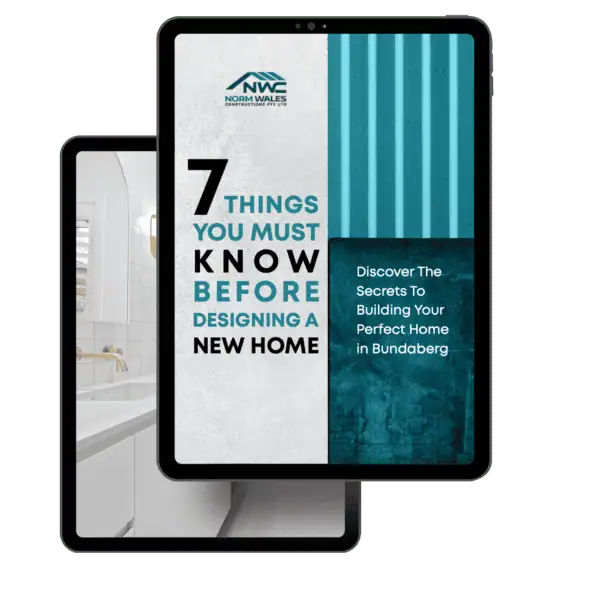
Build with Confidence: 7 Things You Must Know Before Designing a New Home
It walks you through the key questions to ask, the common missteps to avoid, and the practical steps that help you plan properly from the beginning.
Because when you understand how the process works, you’re in a far stronger position – whether you build this year or next.
Grab your free copy today and make sure your next decision is an informed one.
Get to know the man behind your dream home, Norm. Norm Wales Constructions is honored to be APB, and MBA members.