Perfect block mistakes happen more often than people realise.
People get excited when they find a block of land. They can imagine the house sitting there. But what a lot of them don’t realise is this:
You can buy a block that you aren’t even able to build on.
I see this happen more than I should. Someone’s gone out, bought what they thought was the perfect piece of land, and then found out it’s buried in limitations.
Limitations that mean they can’t build what they wanted to build… or they can’t build at all.
That’s why I always say, before you reach into your back pocket, you need to understand what you’re actually buying.
Every block’s different. It’s case by case. And there’s a lot more going on than just the location or how the block looks.
When you get a builder in to assess a block before you buy it, they might be able to tell you in literally 10 minutes if it’s a winner or a trap. Other times, you’ve got to dig a little deeper.
Either way, the goal’s the same: to avoid buying a lemon.
Avoid These Perfect Block Mistakes Before You Buy
Here are 7 things I’d look for if I were assessing a block for you:
1) Zoning Restrictions
Zoning tells you what the land is actually for and what you’re allowed to do with it. Residential, rural, mixed-use, etc.
Even within a residential zone, there can be restrictions. Things like:
→ Height limitations
→ Easement requirements
→ Setback and building envelope requirements
→ Site coverage and open space requirements
→ Frontage requirements
→ Overshadowing rules
→ Privacy rules
Being aware of these restrictions will help you understand what red tape you’ll eventually need to clear… or if your design works there at all.
2) Slope and Shape
Next is the physical lay of the land.
Is it flat, or sloping? Is it a clean shape, or something awkward?
Slopes = excavation work and retaining walls. Awkward shapes = design compromises.
Both = more money.
3) Soil and Ground Conditions
What’s underneath matters just as much as what’s on top.
Clay, sand, rock, roots – all of it changes the build.
It could mean more engineering. More excavation or clearing. Special footings. A different type of slab.
This is one of those things people don’t notice until it smokes their budget.
4) Environmental Constraints
Flood zone requirements can force you to raise your slab.
Bushfire-prone areas mean stricter materials. Stricter construction methods.
Protected vegetation can limit what you can clear, and therefore where you can build.
This stuff usually won’t stop you from building, but it’s good to be aware of it – because it can limit your design while chewing through your budget.
5) Services and Utilities
Is there water connected, or do you have to pay to bring it in?
Where does the sewer connect, and will it actually flow properly from your house, or are you going to need a pump to make it work?
Where does rainwater go when it hits your block? If it can’t drain easily, you’ve got to build in a system to get rid of it.
Where’s the power coming from? If it’s a long way away, you’re paying to run it in.
And what about internet? You probably want a connection, and probably don’t want copper.
6) Nearby Activity and Noise
If the block sits near a main road, a flight path, or anything else that creates constant noise, it can affect the livability of your home.
So you’ll probably want to make some design changes to counteract it, such as:
→ Reducing openings and windows on the noisy side of the house
→ Using internal rooms like bathrooms or garages as buffers
→ Upgrading the thickness (and sealing) of windows and doors
Again, these sorts of changes will either impact your design or eat a hole in your wallet. Or both.
7) Orientation, Sunlight, and Privacy
Which way does the block face? Can you get northern light into your living areas (or wherever else you want it)?
What about your existing neighbours, or your future ones, or any other nearby developments? Will they leave you in shade or impact your privacy?
Planning around this stuff can restrict your design and cost you money. Doing nothing can make your home quite uncomfortable to live in.
Sometimes, It’ll be Easy to Know When to Walk Away From a Block
It could have a 45-degree slope, or a train line running right behind it.
Other times, you might have to spend a few bucks to get a builder to tell you what’s actually going on with the block, so you know exactly what’s possible there.
When you’re talking about the sort of financial hole the wrong block can put you in, spending a bit more money upfront to get this clarity is well worth it.
Of course, there’s more to building a great home than choosing the right block. That’s why I’ve created this free guide for you to download:
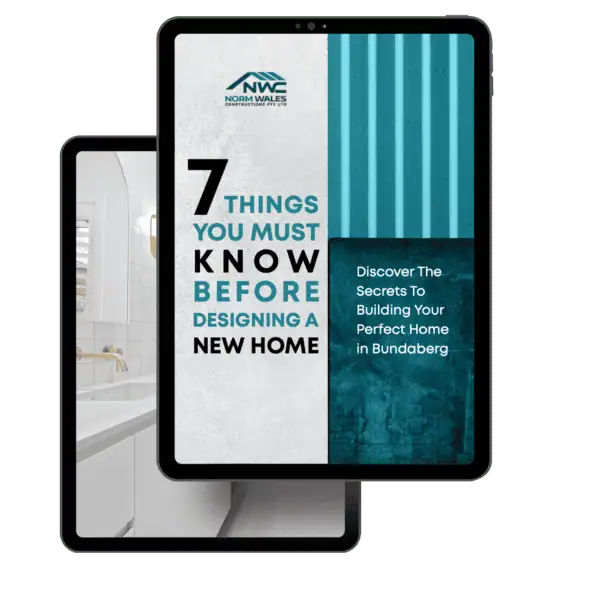
Build with Confidence: 7 Things You Must Know Before Designing a New Home
It’s packed with practical advice to help you ask the right questions, spot red flags early, and plan your build with confidence.
Because once you understand the perfect block mistakes that catch buyers out, you’re already halfway to building your home the right way.
Get to know the man behind your dream home, Norm. Norm Wales Constructions is honored to be APB, and MBA members.