You know what really stays with people after a bad building experience?
It’s not always the delays. It’s not even the stress while the build is happening. It’s what comes afterwards. The second-guessing, and that quiet thought that keeps surfacing: “How did we miss that?”
That lingering doubt is often what happens when you realise, too late, that you were working with a bad builder.
Over the years, I’ve had plenty of people sit down across from me who’ve already built once before. Sometimes the first thing they say is, “We’re not sure we want to go through that again.”
But here’s what I tell them: Instead of fearing it, embrace it, because you’re actually more prepared than you realise.
You’ve got something a first-time builder doesn’t have. You know:
- What didn’t sit right last time
- The questions you wish you’d asked
- And what the red flags look like.
The way I see it, you’ve got a hand full of aces, because you know exactly what to lead with when you sit across from a builder for the first time.
So what are the signals that you’re potentially working with the wrong builder? There are a few that tend to show up early, once you know what to look for:
Signal 1: How a Bad Builder Handles Questions About the Process
And I don’t mean the design or the finishes – I mean how the build actually gets run. Things like:
- How decisions get documented along the way
- How the timeline fits together
- And what happens when something needs to change once things are already moving.
A builder with a real system behind them can walk you through all of that in plain language, because they’ve had that conversation a hundred times before. The answers feel settled and specific.
When you’re speaking with a bad builder, those explanations tend to stay vague, general, or constantly shifting.
You’ve probably already felt what it’s like when nobody can give you a straight answer to those questions once construction is underway – chasing clarity on something that should have been settled months ago, from a position where you’re not in a great spot to push back. So when you keep getting the broad picture without ever quite getting the detail, that’s worth paying attention to. Those answers tend to stay just as general after you’ve put pen to paper.
Signal 2: What Happens When You Bring Up the Hard Stuff?
If you’ve built before, you’re walking into that first meeting carrying more than most people do… some of it you might not even have put into words yet:
- Frustrations from the last time you haven’t fully let go of
- Concerns you’d almost be embarrassed to raise out loud
- Questions you didn’t know to ask the first time around
I’ve seen what happens when people feel genuinely safe enough to put all of that on the table. There was one couple who came to us not even sure they wanted to build again – but once they realised they could be completely upfront, they let it all out, and that conversation became the foundation of everything that followed. By the end, they told us they felt like part of our family.
That kind of connection has to start somewhere, and it usually starts in that very first conversation. A builder who genuinely wants to hear the hard stuff will make room for it early, and one who tends to smooth things over or steer toward more comfortable ground – that pattern doesn’t change once the build is actually running.
Signal 3: Are the Answers Actually Making Sense to You?
There’s something worth paying attention to here that’s easy to miss in the moment. A builder can answer every question you ask and still leave you feeling like you didn’t quite get what you came for… where the words all made sense individually, but you’d struggle to piece them together into something you could explain to someone else later.
In my experience, when second-time builders sit down with someone who genuinely hears what they’re asking and responds in a way that lands, the whole conversation shifts. They start asking the things they were too hesitant to raise the first time around, and the conversation goes somewhere real.
When it doesn’t happen – when you leave feeling like your questions were answered without really being answered – it’s worth sitting with that feeling before you commit to anything, because once you’re further down the track, asking for clarity starts to feel like making a fuss, and who enjoys making a fuss, right?
That early confusion is often one of the clearest signs you may be dealing with a bad builder.
Signal 4: What Do You Walk Away With?
This one is the simplest of the four, and probably the easiest to dismiss.
I’ve sat across from people who got so burnt the first time that they couldn’t bring themselves to build again – some for months, some for years. And when they finally did take that step, they’d look back and say they wished they’d done it sooner. Sometimes, because prices had moved in the meantime, waiting had actually cost them more money on top of everything else.
So after that first conversation, just ask yourself whether you feel clearer than when you walked in. That feeling of confidence early on tends to carry through the whole build, and if it isn’t there from the start, it’s worth finding out why before you take the next step.
You Don’t Have to Learn This the Hard Way
Some people stay stuck after a bad build for months, sometimes years. And the hard truth is that waiting often costs more than people realise.
But I’ve seen plenty of people learn from that first experience and approach things differently the second time. When they lead with the right questions and pay attention to the early signals, the experience can be completely different – especially when they know how to spot a bad builder before signing anything.
A lot of them end up saying the same thing:
“We wish we’d done it this way the first time.”
Build With Confidence
Knowing what signals to look for is a great start. But there’s a bit more to planning a build that goes the way you hoped… and most of it happens before you’ve even chosen a design.
That’s exactly why I put together this guide:
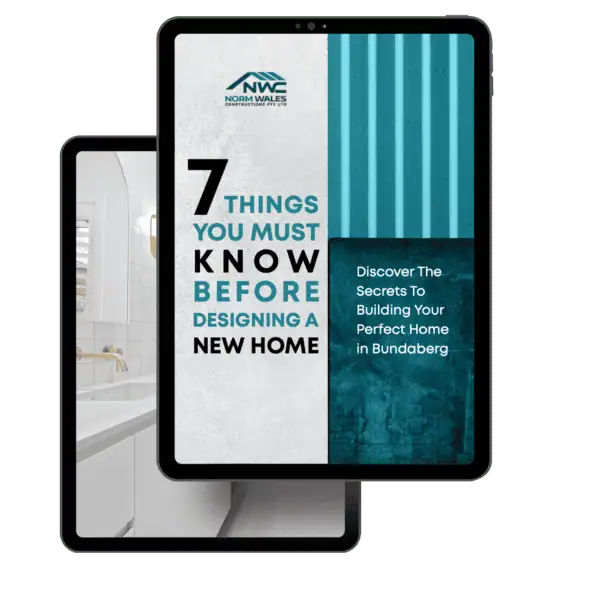
Build with Confidence: 7 Things You Must Know Before Designing a New Home
Inside, you’ll find:
- The key questions to ask before committing to a builder
- The common missteps that catch people off guard
- The practical steps that help you plan your build properly from day one.
Because you shouldn’t need a bad experience to figure this stuff out.
Grab your free copy – and go into those early conversations properly prepared.
Get to know the man behind your dream home, Norm. Norm Wales Constructions is honored to be APB, and MBA members.