Forever-Home Decisions carry more weight than most people realise. Building a forever home means making choices you’ll live with every single day for the next 20 years… and some of them are almost impossible to fix once they’re locked in.
When people come to us about building their forever home, there’s usually one thing they say early on: “We just want to get it right.” Not perfect, not over the top, just right. Because for most people, this home represents everything they’ve worked and saved for over the last 30, 50 years. It’s the nest egg. And unlike a home you’re planning to sell in five or ten years, there may not be a second chance to get it right.
So the decisions carry more weight than most people expect going in. And what I’ve noticed over the years is that the ones people worry about most – the finishes, the features, the look of it all – rarely end up being the ones they wish they’d thought through more carefully. It’s usually the quieter decisions, the ones that shape how the home actually works once you’re living in it, that stay with people the longest.
In my experience, these are the five worth slowing down on.
Decision 1: How The Home Actually Flows
Most people look at a floor plan and focus on room sizes, open space, and how it all looks laid out. That’s natural. But the question that actually matters is: how will you move through this home every day?
Flow is about how easy it is to get from one space to another, how connected things feel when you’re actually in them, and whether the home works with you or quietly works against you. It sounds abstract until you’ve lived in a home that gets it wrong, and then it’s anything but.
Consider what happened to Helen and Peter, for example.
They built their forever home a few years back, and by most measures it looked great. They’d positioned the living area to face the view, which made perfect sense on paper. But the way that played out meant the kitchen ended up behind it, cut off from the rest of the home. When they had people over, Helen would spend the whole time preparing dinner while the conversation was going on in the next room without her. When it was just the two of them, they’d miss the sunset completely, standing at the bench with their backs to the view they’d built the whole home around. It didn’t look wrong on the plan. It just didn’t work the way they actually lived. And in a forever home, that’s a lot of evenings.
Three years on, it still bothers them. The home they were so excited to move into has become one where they notice that same frustration regularly, wishing they could change something that’s now too hard to fix.
Unlike finishes, which you can update down the track, the way a home flows is hard to change once it’s built. So it’s worth getting right before anything gets locked in.
Decision 2: The Difference Between A Good Idea And Real Life
Here’s one that comes up a lot, and it usually surprises people when we raise it.
A lot of decisions that sound perfectly logical on paper don’t quite play out the way you’d hope once you’re actually living with them. Take a common one: some families decide they’d rather build a separate shed than attach a garage to the house. More space, sometimes more cost-effective – it can make a lot of sense.
But then I’ll ask: “What happens when you get home with groceries and it’s raining?”
Suddenly that shed is 20 or 30 metres away, and you’re unloading in the rain, carrying everything back inside and doing it over and over again. Some people hear that and don’t mind at all. Others hear it and go, “Yeah… that would get old pretty quickly.” There’s no right or wrong answer here, but there are things you don’t think about until someone raises them, and it’s a lot easier to think them through now than to wish you had later.
Decision 3: How You Actually Live, Not How Homes Are Meant To Look
There’s a real difference between designing a home that looks right and designing one that works right for the people actually living in it.
Most people start in the same place: open plan, big kitchen, a decent outdoor area. And those things can all be great. But before you get too far into a design, it’s worth stopping and asking some honest questions:
- Do you actually like everything open and social, or do you prefer quieter, more separate spaces?
- Do you entertain often, or mostly keep things low-key?
- How do you actually spend your time at home day to day?
We work with a lot of people in the retirement phase who’ve spent decades hosting family and friends in homes that were never quite right for it. The dining room was too small, or there was nowhere comfortable to sit and talk. For a lot of them, this is the first home where they can finally design around how they actually want to live, whether that’s a big open dining area for proper dinner parties, or a separate space that’s genuinely theirs. Those things matter, and they only come from having an honest conversation about how you actually live, not how you think a home is supposed to look.
A lot of homes look great but don’t quite feel right once you’re in them. Usually it’s because they were designed around what a home is supposed to look like, not around the people living there. No two people live the same way, so the layout shouldn’t be the same either.
Decision 4: How The Home Sits On The Block
This is the one people think about least at the start, and yet it has one of the biggest impacts on how comfortable the home actually feels to live in.
Think about where you live now. Does it get too hot in summer? Feel dark and closed in through winter? A lot of that comes down to sun direction, breezes, window placement and how the home is positioned on the block. Get it right and the home stays cooler naturally, feels brighter through the day, and is genuinely comfortable without leaning heavily on systems to make up for it. Get it wrong and you’re closing blinds from midmorning to stop the glare, running the air conditioning for months on end, and still not quite comfortable in a home you built specifically for yourself.
This is where we’ll sometimes ask clients a question that catches them off guard: do you actually need full ducted air conditioning throughout the whole home? If you’re building down the coast where a sea breeze comes through more often than not, do you really want to spend tens of thousands of dollars on air conditioning for a handful of genuinely hot days a year? In a lot of cases, a few well-placed windows for natural airflow and some good quality fans in the rooms you use most, the living areas, the alfresco, the master bedroom, will do the job just as well.
That’s not cutting corners. That’s being smart about where the money goes, and it starts with thinking about how the home sits on the block before anything else gets decided.
Decision 5: Where Your Money Actually Makes A Difference
When you’re building your forever home, it’s easy to fall into the trap of wanting to include everything. And honestly, I understand that instinct completely, because this is the home you’ve worked toward, and you want to get it right across the board.
But the homes we’ve seen work best aren’t always the ones with the biggest budgets. They’re the ones where the money went to the right places. Here’s a practical example of how that thinking plays out.
Sometimes a client hasn’t budgeted for solar, but it’s something they’d really get value from long-term. Rather than just crossing it off the list, we’ll look at whether there’s somewhere else in the build where we can find a saving, maybe a product that’s slightly more economical but still offers great quality and a solid warranty. Nothing gets compromised, the money just gets put somewhere it’ll keep paying off for years to come. Every month when the power bill lands, they’ll feel that decision. That’s the kind of thing that makes a difference.
The question worth asking isn’t “how do we include everything?” but “where will we actually feel the difference?” Because not every dollar does the same job, and the homes that work best are simply the ones where the most thought went into where the money actually mattered.
Get These Forever-Home Decisions Right Before Anything Gets Locked In
Most of the decisions that shape how your forever home turns out happen well before you get into detailed plans, before anything is written down, before costs are locked in, and before anything becomes too hard to change. That’s the window where the thinking matters most, and it’s the part most people don’t get clear guidance on until it’s already passed.
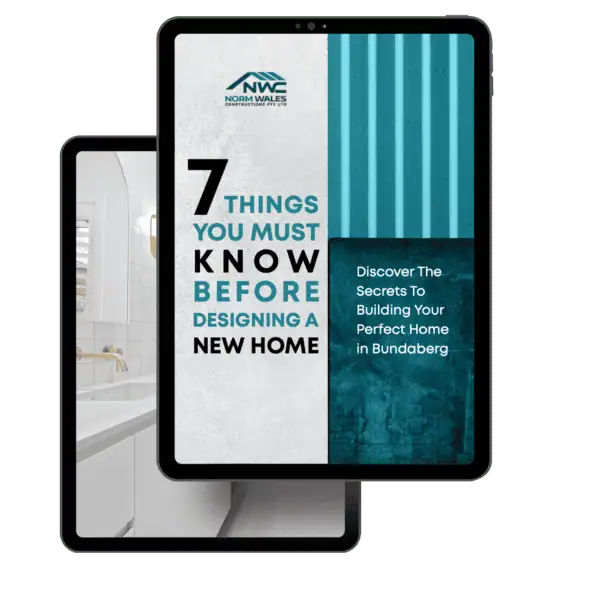
That’s exactly why I put together this guide: Build with Confidence: 7 Things You Must Know Before Designing a New Home
Inside, you’ll find:
- The key decisions to think through before you start designing
- The questions that bring clarity early, not after something’s already locked in
- And the common missteps that are much easier to avoid when you know what to look for.
Because how well a home works usually only becomes clear long after moving day. It shows up in the small things, every single morning, for the rest of the time you live there.
Grab your free copy here and make sure the decisions you’re about to make are the right ones, before you’re living with them.
*Disclaimer: Names and identifying details have been changed to protect the privacy of individuals. These stories are based on real events, and any resemblance to actual persons is coincidental.*
Get to know the man behind your dream home, Norm. Norm Wales Constructions is honored to be APB, and MBA members.
Frequently Asked Questions
What are the most important decisions when building a forever home?
The five you feel every day: how the home flows, choosing ideas that suit real life over what simply looks good, designing around how you actually live, how the home sits on the block, and where your money makes the most difference. Getting the custom home design right early is what makes these decisions work together.
Why does the flow of a home matter so much?
Because you move through it every single day. Awkward paths between the kitchen, living areas and bedrooms create small daily friction that compounds over twenty years, while good flow makes the whole home feel effortless to live in.
Where should I spend my money when building a custom home?
Put the budget where you feel it daily and where it is hard to change later, like layout, flow and the main living spaces, and pull back on the things that are easy to update down the track. A well-planned custom home build protects the parts that genuinely improve everyday life.
Should a forever home be designed around how it looks or how we live?
Around how you live. Homes designed purely to look impressive often do not suit real routines. Designing for how you actually use each space, guided by a builder whose building process asks those questions early, is what makes a forever home comfortable long term.
Why does how the home sits on the block matter?
Orientation and placement affect light, heat, privacy and how usable your yard is. Getting the position right for the sun, the prevailing weather and the outlook is something you cannot easily fix once the home is built, so it is worth resolving before anything is locked in.
Get to know the man behind your dream home, Norm. Norm Wales Constructions is honoured to be APB and MBA members.