Diana and Paul built their retirement home in Bundaberg while living in Darwin. They came down twice during the whole build, so most of what they relied on when choosing their builder had to come from somewhere other than standing on site and checking the work themselves.
Diana’s parents had owned a block at Elliott Heads for about thirty-five years.
It had been rented out all that time, and when Diana and Paul decided to retire out of Darwin, that’s where they wanted to live.
They looked at renovating the old house first, but by the time they priced it up, the cost wasn’t that far off building new.
They also didn’t particularly want to be dealing with repairs and renovations when they were eighty-five.
So the old house was coming down.
The next question was who was going to build the new one.
They were in Darwin, the block was in Bundaberg, and they didn’t know any builders here.
Almost everything would have to happen over the phone, Zoom or Teams.
Their Biggest Fear Was Being Left With Half A House
One of the first things Diana and Paul decided was that they didn’t want one of the big building companies.
At the time, there were building companies going into liquidation all over Australia. They’d seen plenty about it in the news, and understandably, they didn’t want to end up with half a house sitting on the block.
So they were looking for a smaller, established local builder who’d been around for a while.
Diana Googled Bundaberg builders and started making calls.
She rang three.
One of the bigger companies lost her pretty quickly. The person who answered didn’t know much about building. Diana freely admits she didn’t either, but she could still tell the person on the other end knew less than she did.
Then she rang our office and got Charlotte, and that conversation went differently.
Diana explained that they were in Darwin and that virtually the whole build would have to be managed remotely. Charlotte understood what they were trying to do, knew what she was talking about and took the enquiry seriously.
When Diana was later asked what mattered most when they chose a builder, she put that first conversation at the top of the list.
Reputation came second. Then money, timeframe and design.
They didn’t get another quote.
A Good First Phone Call Wasn’t Enough
Diana’s a lawyer and Paul’s a psychologist with a research background, so they’re both pretty good at finding the information they need without spending weeks on it.
They had a quick look through our website. Paul watched some of the videos too, but he said they didn’t influence him much beyond showing that I seemed proud of the work we were doing.
Most of their attention went elsewhere.
They did five things:
1. Checked the licence. Diana confirmed I was properly licensed.
2. Checked for complaints. She looked through the Queensland complaints register.
3. Looked through local news. She went back through old Bundaberg newspaper articles looking for anything concerning local builders.
4. Read testimonials. One stood out because it came from someone who’d also built remotely.
5. Listened to what other people said. They’d spoken to another local builder about something separate. When they mentioned they were thinking about building with us, he told them I was a good builder.
I didn’t know about that last one until recently, and understandably, it carried some weight.
It’s one thing for me to tell someone we’re good at what we do. It’s another when another builder says it and there’s nothing in it for him.
Then The People Around The Build Started Saying The Same Thing
Diana and Paul eventually came down to Bundaberg for a couple of days to choose colours, bathroom fittings, lighting, benchtops, cabinets and everything else that needed selecting.
They had a list of suppliers and spent a pretty busy couple of days getting around them all.
And that’s when they started hearing something they hadn’t really expected.
Once suppliers found out who was building the house, they’d say things like, “You’ll have to be careful with Norm. He wants everything exact.” Or, “There’s no close enough with Norm.“
The trades were saying much the same thing.
If they were doing work for us, they knew it had to be finished properly. One supplier even told them that some builders would come in with half a list and leave them guessing what the client wanted.
Our office didn’t do that. The list was complete.
For someone building from Darwin, I can see why it mattered.
They couldn’t be standing on site checking whether something had been finished properly.
They needed the people doing the work to already know what was expected.
If The House Was Late, They Had Nowhere To Live
Their build also had a very firm deadline.
There were quite a few things that had to line up:
- tenants in the old house who needed proper notice
- a fixed date for demolition and construction to start
- the wet season
- Christmas shutdowns
- lead times on materials and fittings
- and a house in Darwin they’d already sold
So when it was time to move, the Bundaberg house had to be ready.
Otherwise, they didn’t have anywhere to live.
We talked all of that through before they signed, including what had to happen, when it had to happen and whether the dates were realistic.
Paul said afterwards that every deadline was met, which meant they could actually plan their move without constantly wondering whether the house would be ready.
The build also came in on the budget they’d nominated at the start.
They Saw The Build In Person Twice.
Everything Else Happened From Darwin.
The first time they came down was after the old house had been demolished, mainly to do their selections.
The second time was when the new house was almost finished.
Everything in between happened remotely.
One thing Diana found particularly useful was walking through the build on video.
A plan might tell you a room is a certain number of metres wide, but that doesn’t necessarily help you picture how it feels.
Being walked through the framing with a camera made much more sense.
They also met some of the trades over Zoom, including the plumber and electrician.
They’ve dealt with some of those same people since moving in, which has been useful when they’ve wanted things changed or checked.
The Real Test Came When Things Went Wrong
It didn’t all go perfectly.
A few things went wrong along the way:
- The garage position on the plans ran into an issue with council because there were tighter requirements on that stretch of the Esplanade than we’d expected. We changed the plans, didn’t charge Diana and Paul for it, and fortunately it happened early enough that it didn’t affect the build time.
- The original painter died during the build, so that work had to be requoted.
- There were a few disagreements about variations and their costs. Diana and Paul wanted some upgrades, and there were a couple of harder conversations about what those changes would cost.
- Diana also had a fair complaint about a stove they’d chosen early on. Because they couldn’t see that brand in Darwin before making the selection, they picked one they later didn’t like. Changing it became more of a variation process than she thought it should’ve been.
Then there was the septic system.
When Diana and Paul moved in, the power to it hadn’t been switched on.
About a month later, everything backed up. Toilets, sinks, the lot.
It was a long weekend, but the plumber was there within about an hour and got it running again. There was still a smell afterwards that took a few visits to sort out properly.
The point is, building a house isn’t one long run of everything going exactly to plan.
Things happen.
What matters is what happens next.
After All That, Would They Choose The Same Builder Again?
At handover, Diana and Paul got a maintenance guide for their house, including things like looking after the walls near the sea, the locks, the doors and the sliders.
They also got contact details for the trades and suppliers who’d worked on the house.
They’ve used those contacts since.
If they need the plumber, electrician or someone who worked on the TV cabling, they know who to call.
And if we haven’t spoken for a while, we’ll check in and see whether everything’s alright.
Diana and Paul have both said they’d recommend us.
Diana specifically said she’d recommend us to somebody building from a distance, because that’s exactly what they did.
They made the decision fairly quickly, but they didn’t make it blindly.
- They checked the licence.
- They checked the complaints.
- They read what previous clients had said.
- They listened to what other people around Bundaberg said.
Then they got on with it.
And I think that’s probably the useful part of their story if you’re planning to build somewhere you can’t be on site every week.
You can’t supervise a build from two thousand kilometres away. But you can do a fair bit of checking before you choose who’s going to be there when you’re not.
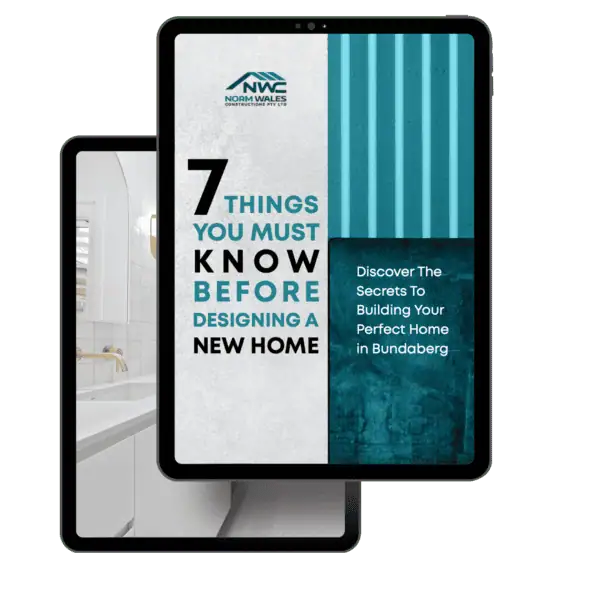
My free guide, Build with Confidence: 7 Things You Must Know Before Designing a New Home, covers seven of the things worth sorting out before the plans and construction start.
Download your free copy and take it with you to every builder you talk to, including us.
Because the standard that matters is the one that’s still there when you’re not watching.
How to Check a Builder’s Reputation: Frequently Asked Questions
How do I check a builder’s reputation before I hire them?
Diana and Paul, who built from Darwin, did five things before choosing a builder. They confirmed the licence, searched the Queensland complaints register, read back through old Bundaberg newspaper articles for anything concerning local builders, read testimonials, and listened to what other people said, including another local builder who had nothing to gain from recommending us. You can read what past clients say on our client reviews page before you ever make a call.
Is it safe to build a home when you live in another state?
It can be, when the checking is done before you choose the builder. Diana and Paul built a retirement home in Bundaberg while living in Darwin and came down only twice, once to choose selections after the old house was demolished and again when the new house was almost finished. Everything in between happened over phone, Zoom and Teams, including walking through the framing by video and meeting the plumber and electrician. Every deadline was met and the build came in on the budget they nominated at the start.
How do I avoid being left with half a house if a builder goes under?
When Diana and Paul were choosing, building companies were going into liquidation across Australia, so they ruled out the big companies and looked for a smaller, established local builder who had been around for a while. They checked the licence and the complaints register before committing. It also helps to know the early signs a builder might go broke before you sign anything.
What happens when something goes wrong on a remote build?
Things go wrong on every build, and what matters is what happens next. On Diana and Paul’s build a garage position ran into council requirements, so the plans were changed at no charge early enough that the build time was not affected, the original painter passed away so the work was requoted, and there were firm conversations about the cost of variations. When the septic system backed up about a month after they moved in, the plumber was there within an hour on a long weekend.
What should I expect from a builder at handover?
Diana and Paul received a maintenance guide covering things like looking after the walls near the sea, the locks, the doors and the sliders, along with contact details for the trades and suppliers who worked on the house. They have used those contacts since, and Norm Wales Constructions checks in after handover if there has been no contact for a while. Our building process explains how a build runs from the first enquiry through to handover.
Get to know the man behind your dream home, Norm. Norm Wales Constructions is proud to be APB and MBA members.