Every Tuesday night you walk the bin down the driveway. There’s a bit of a slope on it, nothing dramatic, and after eleven years you don’t think about it at all.
Then one Tuesday it rains overnight, and the concrete is still wet when you go down in the morning to bring the bin back up.
Your foot slides maybe four inches. Nothing happens. You don’t fall. But your hand finds the fence before you’ve decided to reach for it, and you stand there a moment waiting for your heart to settle before you finish the job and head in for breakfast.
And you don’t mention it to anyone.
That’s where this actually begins. Not with a fall, but with a few seconds on a driveway you’ve walked ten thousand times, and a quiet decision not to say anything, because saying it out loud turns it into something you have to deal with.
I’ve been building homes around Bundaberg for over 26 years, and I’ve stayed close enough to enough of my clients to watch how the long run goes. What I’ve learned is this.
People very rarely leave their forever home because they can’t live in it.
They leave because they can no longer look after it.
A house becomes unmanageable a long time before it becomes unliveable. That’s the part nobody warns you about, because the home doesn’t change. The years do. Year one and year thirty ask completely different things of the person living there, and every one of those things was decided back when the block was chosen and somebody was picking products off a board.
There are four of those decisions. Three of them you’d work out for yourself if you sat down one afternoon and thought about it honestly.
The fourth, in 26 years, I’ve never had a client raise with me. And it’s the one that quietly determines whether the other three ever get looked after at all.
Decision #1: The Slope You Can’t Picture Yourself On In Year Thirty
Slope is the obvious one, and people still underestimate it, because they walk the block once on a dry afternoon with nothing in their hands.
Think about what you’ll actually be carrying on it. A full wheelie bin on green waste night, wet cuttings and all. Shopping from the car to the kitchen. A mower up the side to get to the back lawn. Visitors who aren’t as steady as you are. And every one of those trips happens a few hundred times a year, in the wet as well as the dry.
Stairs are the same story. Three steps at the back door is nothing until there’s no handrail on them and your hands are full.
None of this means avoid a sloping block. Some of the best sites in this region slope and they’re worth every cent. It means knowing what that slope is going to ask of you thirty years in, while it’s still a cheap thing to design around instead of an expensive thing to live with.
Decision #2: The Products That Quietly Decide Who Does The Work
Two homes built to the same standard can ask completely different things of the people living in them, and it comes down to what went into them.
Exposed timber looks beautiful on handover day. It also wants re-oiling every year or two, which means somebody on their knees with a brush along the whole length of it. Powder coated hardware near salt air will chalk and pit years before hot dip galvanised will, and stainless is different again depending on the grade you use.
Then there’s where you’re building. Down the coast you’re managing salt, so galvanised and stainless earn their keep. Out of town near cane you’re managing red dust, and I’d never put a white house on red soil, because you’ll be washing it down four times a year for the rest of the time you own it.
Even the colour you paint is a maintenance decision, if you’re willing to look at it that way.
Decision #3: The Design Details You’ll Never Be Able To Clean
This one is subtle, and it costs people years of scrubbing they never agreed to.
Coastal homes collect salt. That’s simply the price of living near the water. But it’s the shape of the house that decides how much work that costs you. Horizontal ledges above windows collect it. Decorative batten screens collect it in every gap. Sliding door tracks pack up with salt and grit until the door gets heavy. A 300mm gap between a wall and a fence that you can’t get a broom or a hose into becomes a permanent problem.
A home designed for its environment simply gives the environment fewer places to hide. Same house, same view, same lovely spot near the water, and a very different number of Saturdays.
Decision #4: Whether You Can Safely Reach The Work At All
Which brings me to the one nobody asks about, and the reason it sits above the other three.
Every home needs somebody to get up to it. Gutters after the leaves drop. The air conditioning condenser, which wants a clean and a protective coat once a year or you’ll be replacing it inside seven to ten. Solar panels. Sensor lights. The roof after a decent storm has been through.
On a flat block that’s straightforward, because the ladder stands square and the job is just the job.
On a sloping block it isn’t. Put a ladder on ground that falls away and one foot sits lower than the other, so the whole thing wants to twist under you. On the downhill side of a sloping block, an eave that measures 2.4 metres at the front can be 3.6 metres at the back, which is a completely different ladder and a completely different risk.
So here’s a 2-minute test worth running before you buy: Walk the block and ask where a ladder would stand to reach each side of the roof. If there’s a side where you can’t picture flat, solid ground for it, that side of your home will eventually stop being maintained.
Not through neglect, and not because you stopped caring about the place. Simply because getting to it stopped being a sensible thing to do.
And that’s why this one governs the rest. Every good product and clever design decision in that house depends on somebody being able to reach it. Once they can’t, the house starts falling behind. And a house that’s falling behind is a house somebody eventually talks you out of.
Bottom Line: Even The Best Home Asks Something Of You
There’s no such thing as a house that needs nothing at all. The difference between one that stays easy and one that slowly starts working against you isn’t luck, and it isn’t how much you spent. It’s whether these decisions were made with the next thirty years in mind, and whether anybody sat down and told you plainly what your home is going to need from you.
Which brings me back to that Tuesday morning.
The slope was never the problem. Eleven years of walking down it wasn’t the problem either. The problem is that nobody sat down with you before that driveway was poured and asked what doing this would be like for you when you’re older.
And the reason you didn’t mention it over breakfast is that some part of you already knew the answer.
That one question is the whole difference between a home you live in, and a home you eventually leave.
To help you ask the questions most people never get asked, I’ve put together a free guide:
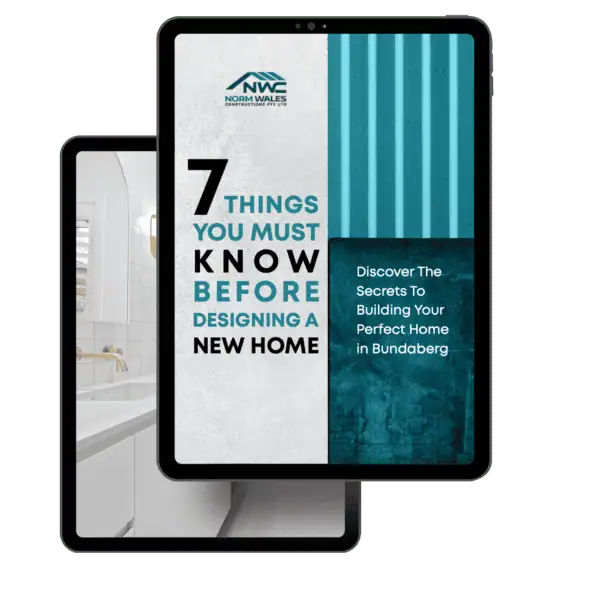
Build with Confidence: 7 Things You Must Know Before Designing a New Home
It covers the decisions that get made early and quietly, the ones that shape your budget, your design, and how much your home will be asking of you long after we’ve packed up and gone.
It’s a 10-minute read that could change what “forever” actually means for you and your home, and whether that’s still true in 2056.
Designing a Low-Maintenance Forever Home:
Frequently Asked Questions
What does it take to design a low-maintenance forever home?
Designing a low-maintenance forever home comes down to four decisions: the slope of the block and what it will ask of you in thirty years, the products you choose and how much upkeep they demand, the design details that collect dirt, salt or grime, and whether every part of the home can be safely reached for maintenance. These are worth reviewing against your custom home plans before anything is locked in.
Why does a sloping block matter for long-term home maintenance?
A sloping block is not a reason to walk away, some of the best sites in the region slope, but it does change what everyday tasks like wheeling out the bin, mowing or carrying shopping will ask of you thirty years in. The cost of designing around a slope upfront is far lower than the cost of living with it later.
Do building materials really affect how much upkeep a home needs?
Yes. Exposed timber needs re-oiling every year or two, powder coated hardware near salt air chalks and pits faster than hot dip galvanised or stainless, and even paint colour becomes a maintenance decision near red dust or coastal salt. We have matched materials to conditions across the homes we have built around Bundaberg and the coast.
What design details make a home harder to clean?
Horizontal ledges above windows, decorative batten screens, sliding door tracks and tight gaps between a wall and a fence all collect salt, dust and grit over time. A home designed for its environment gives that environment fewer places to hide, which means fewer weekends spent scrubbing.
How do you know if a home will be safe to maintain as you get older?
Walk the block and picture where a ladder would stand to reach every side of the roof. If one side falls away or there is no flat, solid ground for it, that side of the home will eventually stop being maintained, not through neglect, but because reaching it stops being sensible. This is exactly the kind of question worth raising before the block is chosen.
Get to know the man behind your dream home, Norm. Norm Wales Constructions is proud to be APB and MBA members.