You know what I’ve noticed?
The 4 Decisions people make when they decide to build a new home, they’ll often spend more time researching a $2,000 TV than they do planning the biggest investment of their life.
And I get it. Everyone is busy with work, kids, and other commitments. Adding design meetings and reviews can feel like just another thing you don’t have time for.
So most people look for the simplest way to get started; usually in the form of a clear price, a quick start date, and a builder who says, “We’ll take care of it. Just sign here.”
It feels efficient, like you’re finally moving forward.
But building your forever home isn’t something you can just set and forget.
later as the result of four early choices — the 4 Decisions — that quietly shape the entire build:
- Variations you didn’t fully understand
- Delays you didn’t anticipate
- Costs that stretch further than you expected
- Or living in a home that never quite feels settled.
Over the years, I’ve seen four early decisions quietly shape how a build unfolds.
They rarely seem important at first, but they decide whether your build goes smoothly or becomes stressful.
Let’s look at the first one:
1. The Deadline Decision
This is the decision to prioritise getting started over getting clarity.
It usually sounds reasonable.
“We just want to lock it in.”
“We don’t want to lose our spot.”
“We’ll sort that out as we go.”
Momentum feels productive, but construction won’t slow down to fix things that weren’t clear from the start.
When the planning stage is cut short, you’ll often see:
- Plans signed without a thorough review of inclusions and exclusions
- Engineering or site requirements skimmed instead of properly questioned
- Allowances accepted without knowing what they realistically cover
- Selections rushed just to keep the schedule moving.
Most people don’t see the gap until the slab is poured and the trades are booked, which is why it’s so important to take the time to review drawings and ask direct questions – because it stops small misunderstandings from turning into costly corrections when it’s already too late.
2. The Delegation Decision
This is the decision to hand everything over without staying engaged.
A good builder should lead the process, but things work best when both sides stay informed.
When homeowners step back too far, patterns tend to show up:
- Variations approved without fully understanding what changed
- Layout tweaks agreed to without picturing how the space will actually function day to day
- Materials selected quickly without considering how they’ll wear over time
- Questions left unasked because “they probably know best”
We’ve built second and third homes for clients who came to us after building elsewhere. In some cases, they told us they hadn’t been as involved the first time. They signed off on things they didn’t fully understand. Later, they realised the home didn’t suit how they actually lived.
Some of them ended up selling what was meant to be their forever home.
The lesson is clear: being involved doesn’t mean you have to run the site yourself. It means understanding the decisions that will affect how you live for years.
3. The Documentation Decision
This happens when there isn’t a clear plan guiding the build.
It starts small, with verbal agreements and a few assumptions. Conversations that feel settled but never make it into writing.
Over time, that lack of clarity adds up.
When a project drifts, you’ll often see:
- Verbal agreements that don’t appear on final drawings
- Adjustments discussed but never formally updated
- Selections assumed instead of confirmed
- Allowances carried forward without revisiting whether they still align with the vision
Trades build from documentation, suppliers deliver from approvals, certifiers assess what’s on paper.
If the paperwork doesn’t match what everyone understands, work stops until it’s sorted out. That delay can cost time, money, and momentum.
A structured planning process, on the other hand, isn’t just extra paperwork. It’s there to protect you.
Clear documentation keeps everyone aligned and moving forward with confidence.
4. The Discount Decision
Short-term savings can end up guiding choices that shape your home for years.
Every build has a budget, and that’s normal. What matters is how value is assessed within that budget.
When decisions are driven primarily by upfront savings, you’ll often see:
- Materials chosen for cost rather than durability
- Allowances set at the lowest level without realistic upgrade planning
- Site preparation or engineering reduced to protect the headline figure
- Insulation, ventilation, or future-proofing treated as optional extras.
Each choice might not seem important on its own, but together they shape how your home performs over the next ten or twenty years.
We’ve seen clients save a few thousand dollars at first, only to spend much more fixing problems later.
At the end of the day, the home reflects the mindset that shaped its decisions.
The Bottom Line: The Build Follows the Decisions
Most people don’t realise they’re making these decisions.
They’re just trying to get started, reduce stress and keep things simple.
But the home you live in later is built long before the slab is poured.
In the plans you review, the questions you ask, how involvement both you and your builder are, and the values you prioritise.
Those choices don’t go away once construction starts. Instead, they affect the whole build and the years you spend living in your home.
If you want a home that works for you long term, the work starts early.
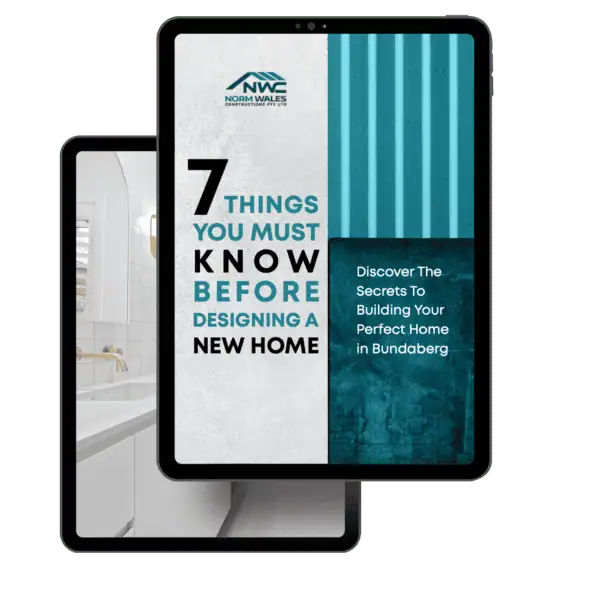
Of course, there’s much more to building well. That’s why I’ve created this free guide for you to download:
Build with Confidence: 7 Things You Must Know Before Designing a New Home
It will help you ask the right questions, avoid common missteps, and approach your build with clarity from day one.
Because the build follows the decisions.
Always.
Get to know the man behind your dream home, Norm. Norm Wales Constructions is honored to be APB, and MBA members.