The failures people blame on distance were locked in months earlier, while they were still sitting at the table with the builder. Every one of them is checkable before you sign a thing.
Ray and Denise saw their new home for the first time on handover day. They’d spent the eighteen months of the build two thousand kilometres away, which is what they had planned on, and what they had been told would be fine.
The power point they had asked for beside the bed was on the far wall. The tiling in the ensuite stopped at a height nobody had ever put to them. The laundry door opened into the space where the basket was always going to sit. None of it was a disaster. But, all of it was permanent, and all of it had been paid for.
What they said afterwards wasn’t that their builder had been dishonest. It was that the questions were never asked. Small details were overlooked and never discussed. The calls thinned out, then mostly stopped, and by the time they laid eyes on anything, it had already been built.
Most people hear a story like that and reach the obvious conclusion. They were too far away. If they could’ve driven past the site, walked the frame, caught things early, it would’ve gone differently.
That conclusion is understandable. But it’s also misguided, and it talks good people out of the home they’ve spent their whole working life saving for.
The Damage Is Done At The Drawing Stage
The thing almost nobody asks a builder is what, exactly, they’re being asked to put their name to.
There’s a real difference between signing on concepts and preliminary drawings, and signing on full working drawings that a trade could build from without asking a single question. It sounds like a technicality, but it’s the best predictor I know of whether you end up with the home you actually asked for. When you sign on concepts, a long list of decisions is still open, and somebody has to close that list. If you live twenty minutes from site, some of those decisions land on you on a Tuesday, standing in the mud, with a truck waiting. If you live two thousand kilometres away, they get closed without you, and you meet the results at handover.
That’s what happened to Ray and Denise. Not because they were interstate, but because the detail was never settled in the first place, and being away simply meant nobody could ask them.
Settling it properly looks like this:
Before a peg goes in the ground on one of my jobs, more than 100 hours have gone into planning the build, across 627 documented steps. Every supply ordered. Every trade booked. Every milestone dated. Plans, specifications and selections walked through in detail and locked down, right through to the colour of the grout in the ensuite. It’s why the homeowner has a full itinerary from the first day to the week they move in, and why our builds hand over on the contracted date or ahead of it.
Twenty-six years and more than 260 homes is how long it took to learn the difference between a good build and a bad one is almost never made on site. It’s made at the table, months earlier, in the questions somebody either asks you or doesn’t.
How to Test a Builder Before You Trust Him With Your Life Savings
You don’t need to take anybody’s word for this, including mine. There are things you can check before you commit a cent, and most of them cost you nothing but a phone call.
1. Ring him on a Saturday afternoon.
Not during office hours, when there is someone at a desk paid to answer. Ring on a Saturday afternoon or a Sunday and see what happens. Maybe he picks up. Maybe he doesn’t, and he rings back first thing Monday morning, which is a perfectly good answer. What you’re testing is whether the call comes back at all, and whether it comes back at a time that feels reasonable to you. If a builder can’t return a simple phone call while you’re still deciding whether to hire him, ask yourself honestly how that will go when you are interstate and something needs a decision.
2. Ring the local trades and suppliers.
Call a few suppliers and subcontractors in the region and ask about him. They know who pays on time, who plans ahead, who turns up with a schedule and who turns up with a problem. Five minutes on the phone to a local supplier will tell you more than an hour on a website.
3. Ask how he will communicate with you, then ask where that’s written down.
Every builder will say yes to the first question. Of course they will keep you updated. So take it a step further. Is it a text message here and there and a phone call when something goes wrong, or is it a scheduled video call where you can see faces and see the site? Then ask the question that separates the two: where is that documented in your process, and at which stages of my build does it happen? If it exists as an intention rather than a scheduled item, it will not survive a busy month.
4. Ask to see the schedule, then see how deep it goes.
A lot of builders won’t have one at all. Some will show you a bar graph with a coloured block for the plasterer, a coloured block for the electrician, and a sliding scale down the side. That’s hardly enough to qualify as a real schedule. Ask whether they can show you, day by day, what’s actually happening on your site. If they can, you’re dealing with somebody who has already thought your build through to the end. If they can’t, every decision on your job will be made on the run, and you won’t be there when it happens.
5. Ask for references from out-of-area builds specifically.
Any builder can produce a happy local client. Ask to speak to somebody who built with him from another state or another country, and ask that person how they found out what was going on week to week. Case studies and testimonials from out-of-area clients are worth asking for. Talking to one of those people directly is worth considerably more.
The One Percenters Are What You Actually Lose From a Distance
When a build disappoints someone from a distance, it’s rarely the roof. Instead, it’s the height of the towel rail. It’s which side of the wall the toilet roll holder ended up on. It’s a light switch you would have moved 300mm to the left if anyone had asked, and a power point you’ll be running an extension lead from for the next twenty years.
None of those things sound like much on their own. Add them up across an entire house and they’re the difference between a home that fits you and a home you’re quietly working around for the rest of your life. Every one of them is decided in about ninety seconds, and every one of them is yours to live with for two decades.
This is where being physically present has always mattered, and it’s also the part that’s easiest to replace if a builder is willing to put the time in. On my jobs, if you can’t be here, you get on a video call and walk the site anyway. You talk to the tiler. You talk to the painter, the plumber, the electrician, the air conditioning bloke, whoever is on the tools that week. You point at where you want the switch. You say you want that fixture shifted. You’re doing exactly what you would be doing standing in the room, and the trade is hearing it from you rather than reading it off a plan.
Plenty of builders who’ll happily take an out-of-area job won’t do this. It’s not that they can’t – it just takes time, and it’s far easier to say the position is marked on the drawing and that’s what you’re getting.
How Involved You Are Is Your Decision, Not Your Builder’s
There’s an opposite problem that nobody warns you about.
Some people don’t want a video call at every milestone. They don’t want to talk to the painter. They’ve sold up, they’re travelling around Australia or overseas, they’re dealing with patchy internet in a caravan park somewhere, and the last thing they want is the phone going with an urgent question about tapware while they’re trying to enjoy the trip. What they want is to hand over their selections, know it’s being handled properly, and collect the keys at the end.
That’s a completely legitimate way to build, and it works, provided the groundwork was done properly at the start. Contracts can be signed remotely. Selections can be made remotely. The entire process can be run remotely if that’s what suits you.
I’ve handed over homes to people who hadn’t set foot on the site until the day they got the keys. I’ve also had clients fly in three or four times, because the schedule told them exactly when the frame was going up and they wanted to be there for it. Both are fine. What matters is that the level of involvement is your choice, made deliberately, rather than something your builder’s systems have quietly decided on your behalf.
The Question Underneath All Of This
Nobody building from out of area is really asking whether it can be done. They’re asking whether they’ll find out too late.
The honest answer is that you’ll find out early or you’ll find out late, and which one you get is decided before construction starts.
It comes down to whether every decision was made while you were still in the room, and whether the process for keeping you in the room afterwards exists on paper or only in conversation.
You can check both of those things right now, before you sign anything, with a few phone calls and a handful of direct questions.
Ray and Denise did eventually build again, and the second time they built with me. What they said had changed wasn’t the distance. It was that they were asked about the towel rail.
The distance isn’t the risk. The question nobody asked you is.
Everything above happens before construction starts, which means it happens during design. That’s the window where a home is either specified properly or left open to be guessed at later, and it’s the window most people walk through without knowing what to ask for.
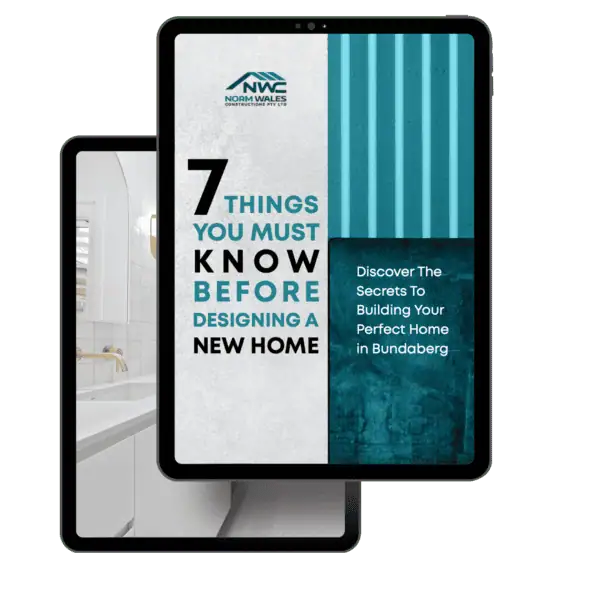
My free guide, Build with Confidence: 7 Things You Must Know Before Designing a New Home, sets out the seven decisions that need to be closed at that table, in that room, before anybody draws a slab. If you’re building from out of area, they’re the seven that decide what your handover day looks like.
Download your free copy, and remember: the detail you never got asked about is the detail you live with.
*Client stories in this article are composites drawn from real builds. Names and identifying details have been changed.*
Choosing a Builder for a Remote Home Build: Frequently Asked Questions
Can I build a home in Bundaberg if I live interstate?
Yes. Contracts, selections and the whole build process can be run remotely, provided the groundwork is done properly at the start. Norm Wales Constructions has handed over homes to clients who never set foot on site until they collected the keys, and has had others fly in three or four times because the schedule told them exactly when the frame was going up. If you are weighing up a custom home builder from out of area, the distance is not the risk, the question nobody asked you is.
What should I check before signing with a builder if I cannot visit the site?
Five checks cost nothing but a few phone calls. Ring the builder on a Saturday afternoon and see whether the call comes back at a reasonable time, ring local trades and suppliers and ask about him, ask how the builder will communicate with you and where that is written down in the process, ask to see a day by day schedule rather than a bar graph, and ask to speak to a client who built with him from another state or country.
Why does it matter whether I sign on concepts or full working drawings?
Signing on concepts leaves a long list of decisions open, and somebody has to close them. If you live close to site, some of them land on you at short notice. If you live interstate, they get closed without you and you meet the results at handover. Full working drawings are ones a trade could build from without asking a single question, and they are the best predictor of ending up with the home you asked for, so settle it before you choose between custom home plans.
How can I stay involved in my build from a distance?
If you cannot be on site, you can walk it by video call. You talk to the tiler, painter, plumber and electrician, point at where you want the switch and say what needs to shift, so the trade hears it from you rather than reading it off a plan. How involved you are is your decision. Some clients want a call at every milestone and others hand over their selections and collect the keys, and a well run building process works for both when the groundwork is done properly at the start.
How much planning should happen before construction starts?
On Norm Wales Constructions builds, more than 100 hours go into planning across 627 documented steps before a peg goes in the ground. Every supply is ordered, every trade is booked and every milestone is dated, and plans, specifications and selections are locked down right through to the colour of the grout in the ensuite. That is why homeowners get a full itinerary from the first day to the week they move in, and why builds hand over on the contracted date or ahead of it.
Get to know the man behind your dream home, Norm. Norm Wales Constructions is proud to be APB and MBA members.