Nine out of ten people laugh when we ask that, and I honestly don’t blame them. We joke about it ourselves. Twenty six years of building homes around Bundaberg, and there I am with a pen out, asking a grown adult to have a serious think about a toilet roll holder.
We ask it anyway. And we ask about a hundred other things at exactly that level of detail.
The reason has very little to do with toilet roll holders.
It’s that this is the level where your actual life happens – in the ten thousand small physical moments you’ll have in that house between the day you move in and the day you leave it. A question like that takes you ten seconds to answer, costs nothing to get right, and then it’s fixed to a wall for as long as you own the place.
Get it right and you’ll never think about it again, which is precisely the point of getting it right.
Get it wrong and it’s a small awkward reach, several times a day, for twenty five years.
The Part I Can’t Do Without You
Here’s my problem. I can ask the question, but I can’t answer it.
I’ve built enough homes to know where every one of these decisions sits, and to know that most of them get closed off quietly, usually before anybody realises there was a decision available at all. That’s my side of it and it took me a long time to learn.
But I’ve never lived your ordinary day.
Take your garage. You’ve probably had the same one for years, and I’d guess you’ve never really thought about it, because there’s nothing much to think about. You park the cars. There might be a workbench along one wall.
Except you open your door until it’s an inch off the wall and get out with your shoulders turned. When somebody parks beside you, you keep a hand on your door on the way out so it doesn’t swing into theirs. You’ve done it so many times that your body does it now without consulting you.
What you haven’t realised is that you’ve been researching your next garage for nine years and you don’t even know it.
Thirty centimetres of extra width would fix it. That’s nothing on a slab that hasn’t been poured yet, and it’s impossible on one that has. But I can’t put it in the plan, because from where I’m sitting your garage is just a garage.
And there’s something else in that room you’d know and I wouldn’t. There will come a time when you put more weight through that car door getting out, not less. That’s fine when the door swings all the way open. It isn’t fine when you’re holding it back with one hand.
Now multiply that by every room in the house.
You’re carrying the single most valuable thing in this entire project: years of first-hand evidence about what does and doesn’t work for you.
What It Costs To Say Nothing
Most people never hand that evidence over. Not because they don’t have it, but because they’ve quietly decided it’s too small to be worth raising in a meeting about a house.
We built for a couple once who’d made that call in their previous home. Standard bench height, perfectly nice kitchen, nothing anyone would complain about. But both of them felt it in their lower back every time they bent over the sink, because the benches sat slightly too low for how tall they were. Washing up, prepping dinner, rinsing a cup. Several times a day, for years.
When we built their new home, we raised the benchtops to suit them. Everything else about that kitchen was ordinary. And not long after, the back pain eased up.
There was nothing clever in that. Nothing technical about it whatsoever. It happened simply because somebody sat down and asked them what they didn’t like about their old kitchen, and they were willing to answer honestly instead of dismissing it as a complaint about nothing.
This Only Works When Both Sides Know What To Look For
When your evidence meets a builder who knows where all the decisions are buried, it compounds. Two people going properly deep on the one percenters, and the whole home lifts because of it. When either side is missing, you get missed opportunities instead, and I see them constantly in homes people have already finished and moved into.
Our half of that is deliberate. We run documented systems with checklists sitting behind checklists and enough triggers built in that no question simply gets forgotten on the day. Nothing depends on somebody happening to remember.
Your half costs an hour or two, sitting down and going through it properly. That’s the entire ask. An hour or two, against twenty five years of living in the answer.
The Problem You Stopped Noticing Is Still A Problem
Nine out of ten people laugh. I hope you did too.
The tenth doesn’t.
The tenth person has a shoulder that no longer rotates the way it used to. They’ve been reaching for that roll at an awkward angle for six or seven years in a house that was never designed around them, and somewhere along the line they stopped mentioning it, because they’d decided it was their problem to work around rather than anybody else’s to solve.
When we ask, they answer straight away. No hesitation and no joke. “Left side, 750.” Because they’ve known the answer for years.
But the lesson here isn’t really about them.
Everybody who sat in that chair and laughed is also the tenth person about something. There’s some detail in the home you’re in right now that you’ve been quietly working around for so long you’ve stopped registering it as a problem at all. You’ve absorbed it. You’d never raise it unprompted, because you filed it years ago under things that are simply how houses are.
It isn’t how houses are. It’s how that house was.
Bottom Line: A Missed Question Doesn’t Stay Small For Long
A toilet roll holder is the smallest thing I could have opened with, and I chose it deliberately.
Because if a question that trivial can cost you twenty five years of daily irritation, it’s worth asking what the same silence costs at the other end of the scale.
That pattern doesn’t stay small. It runs the whole length of a build. What you assumed was fixed and never was. What you didn’t know you were allowed to ask for. What your budget was quietly doing while nobody talked about it plainly. Where your timeline actually goes and who controls it. Whether the home suits the life you’ll be living in it in twenty years, rather than only the one you’re living today.
Every one of those is the same failure, scaled up. Nobody asked, so nobody answered, and by the time it surfaces the concrete has gone off.
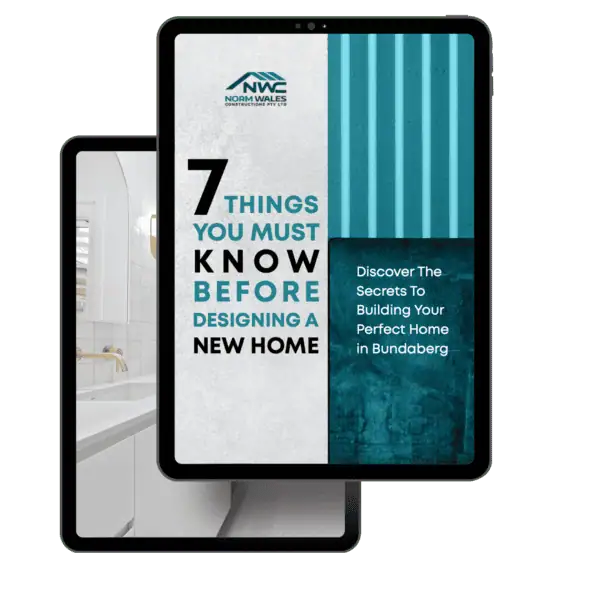
So before you sit down with anybody, including me, I’d like you to have the questions in hand. That’s why I’ve created this free guide:
Build with Confidence: 7 Things You Must Know Before Designing a New Home
It covers the costs most people never see coming, how to stay in control of your timeline instead of chasing it, and how to design a home that genuinely fits your life from the first day you’re standing in it.
The One Question That Prevents Build Regret: Frequently Asked Questions
What is the one question that prevents build regret?
The one question that prevents build regret is simply asking what has not worked for you in your current home, the small physical details like bench height, door clearance or which side a rail sits on, because those tiny decisions are fixed to a wall for twenty five years once the concrete goes off. Answering it honestly before your custom home design is locked in costs nothing and saves years of daily irritation.
Why do small design details matter more than big decisions in a new home?
Small design details are the ones you interact with dozens of times a day for decades. A bench that sits an inch too low or a door that swings the wrong way costs almost nothing to fix on paper but becomes a permanent daily irritation once it is built. Big decisions like room count get noticed and discussed, while the one percenters usually get missed simply because nobody thought to ask.
What kind of everyday details should I raise with my builder before designing?
Anything you have quietly worked around in your current home is worth raising against your custom home plans, garage door clearance, bench height, which side a towel rail or toilet roll holder sits on, and how a room is actually used day to day rather than how it looks on paper. These details are cheap to change before a slab is poured and expensive, or impossible, once it is not.
How do experienced builders make sure these small questions do not get missed?
Documented systems with checklists behind checklists mean these questions get asked every time, rather than depending on someone remembering to bring them up. Decades of experience shows where most of these decisions quietly get closed off, but a builder still needs the client to supply the half only they know, their own everyday experience of living in a home.
Is it normal to not notice these small annoyances in my current home?
Yes, completely normal. Most people file small daily annoyances, an awkward door or a bench that is too low, under things that are simply how houses are, rather than recognising them as fixable design decisions. Naming them out loud, even ones that feel too small to mention, is exactly what stops the same problem following you into your next home.
Get to know the man behind your dream home, Norm. Norm Wales Constructions is proud to be APB and MBA members.